What new research reveals about the Montessori approach
What neuroscience says children need
Stanislas Dehaene is one of the world’s leading cognitive neuroscientists. He has drawn together decades of research into four things that learning depends on. Children learn best when they:
- can focus on one thing that matters
- are actively engaging, not just watching or listening
- find out quickly, in a neutrally way, when they have gone wrong, and can self-correct
- practise until it becomes second nature
In his own book, Dehaene points to Montessori schools as an example of an approach that works.
What that looks like in a Montessori classroom
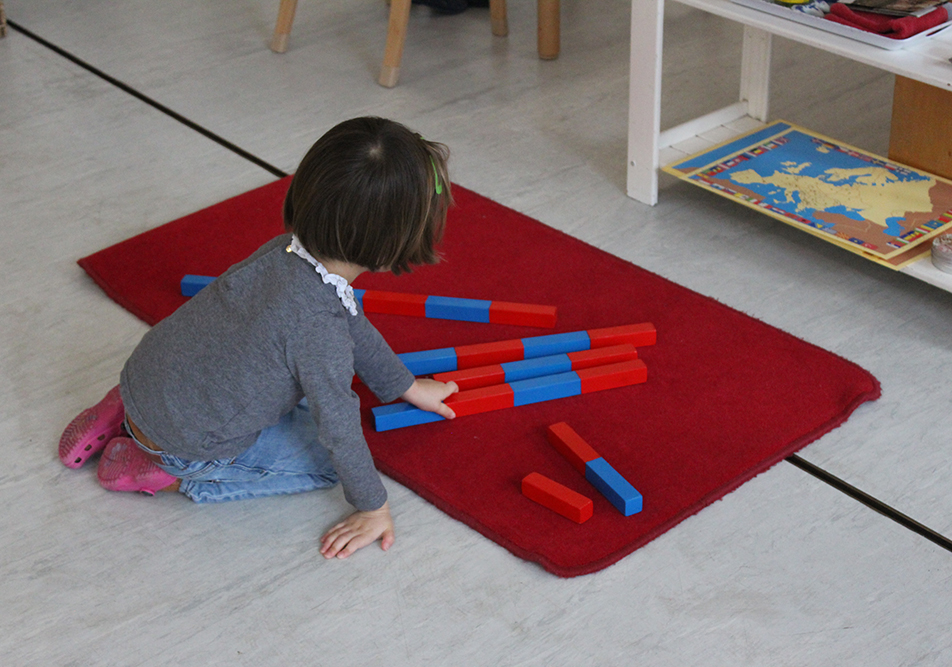
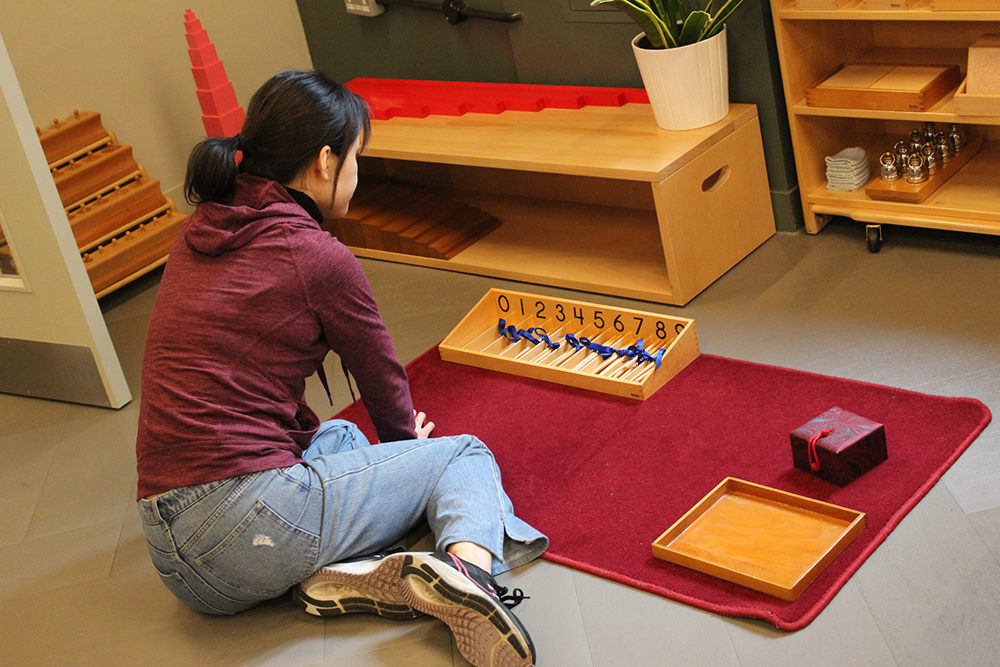
Numbers are abstract. The number “5” written on a page means nothing to a young child until they understand the amount it stands for. Montessori’s answer is to give each idea a physical form first, such as wooden Number Rods whose length represents the quantity, or similar objects, such as the Spindles in the Spindle Box to count and hold so that they feel the differences in quantity. Step by step, that concrete support is taken away, until the child understands the number in their head and can work with the symbols alone.
All four of Dehaene’s conditions are built in:
- Focus. Each material is designed to introduce one new idea at a time, so nothing else competes for the child’s attention.
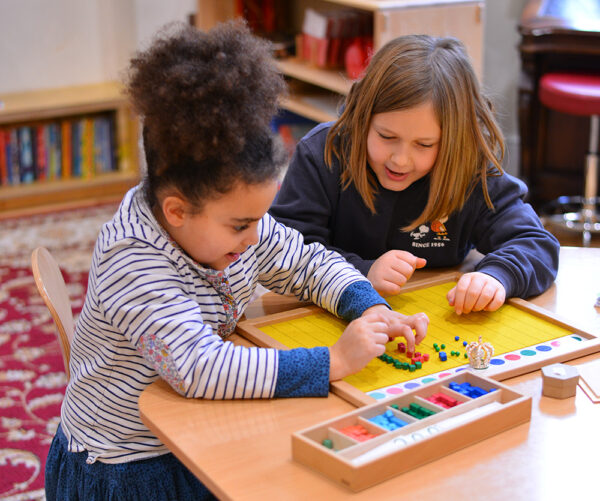
- Doing. Children handle, count, build and manipulate quantities. They learn through their hands and movement as well as by using their visual and haptic senses.
- Putting mistakes right. The materials show the child when something has gone wrong. The Spindle Box, for example, holds exactly the right number of pieces, so if any are left over the child knows to check again. They correct themselves, without waiting for an adult to point out the error.
- Practice. Children meet the same idea many times, in different forms, and can repeat an activity as often as they like. They move on when they are ready, so each idea is consolidated and each new step rests on secure foundations.
Does it make a difference?
The research says it does. A 2023 review of 12 carefully matched studies found that Montessori children did better in maths than their peers in conventional schools. Several large trials since, including a national randomised controlled trial in the United States, have found similar benefits. One five-year trial found the advantage in maths problem-solving showed up after a few years, so the benefits may keep building. Also, there is an important detail for parents here. The more closely a school follows Montessori principles, the stronger the benefit for maths. Schools that borrow a few Montessori ideas don’t see the same results as classrooms run by well-trained Montessori teachers.
Why training matters
At the Maria Montessori Institute, we prepare teachers to understand why each material and each step is there, not only how to present it. This research gives that understanding a firm scientific footing. A trained Montessori teacher knows why a child must spend time with materials that represent quantities before numbers and doing sums, and how to judge when they are ready for the next step.
Choosing a start for your child
If you are choosing a nursery or school, it is worth asking how they will introduce your child to maths. Maria Montessori designed her approach more than a hundred years ago by observing children closely. Neuroscience is now showing just how well it fits the way children’s brains learn.
The full paper is free to read: Marshall, C., Livingston, L. & Van Herwegen, J. (2026). Mapping the Montessori mathematics curriculum to Dehaene’s four pillars of learning. npj Science of Learning, 11, 50.