Louise Livingston, Head of Training at the Maria Montessori Institute
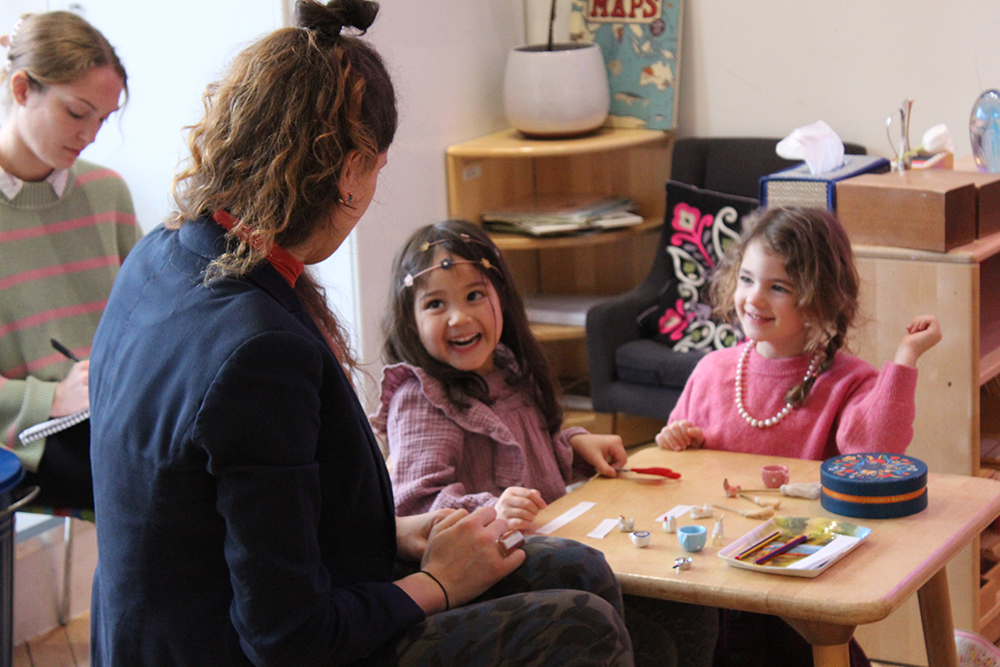
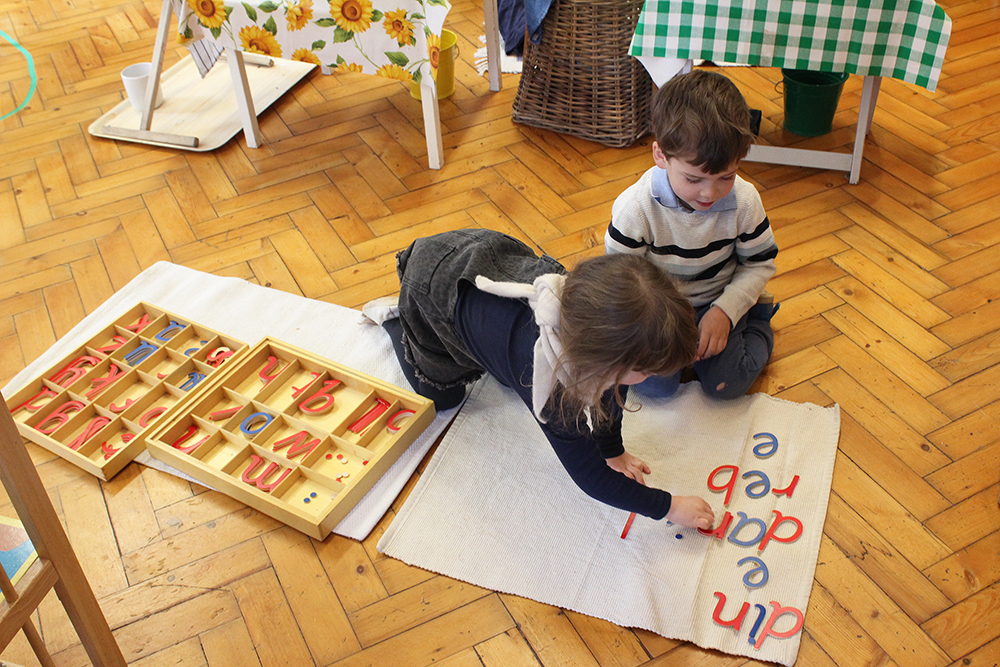
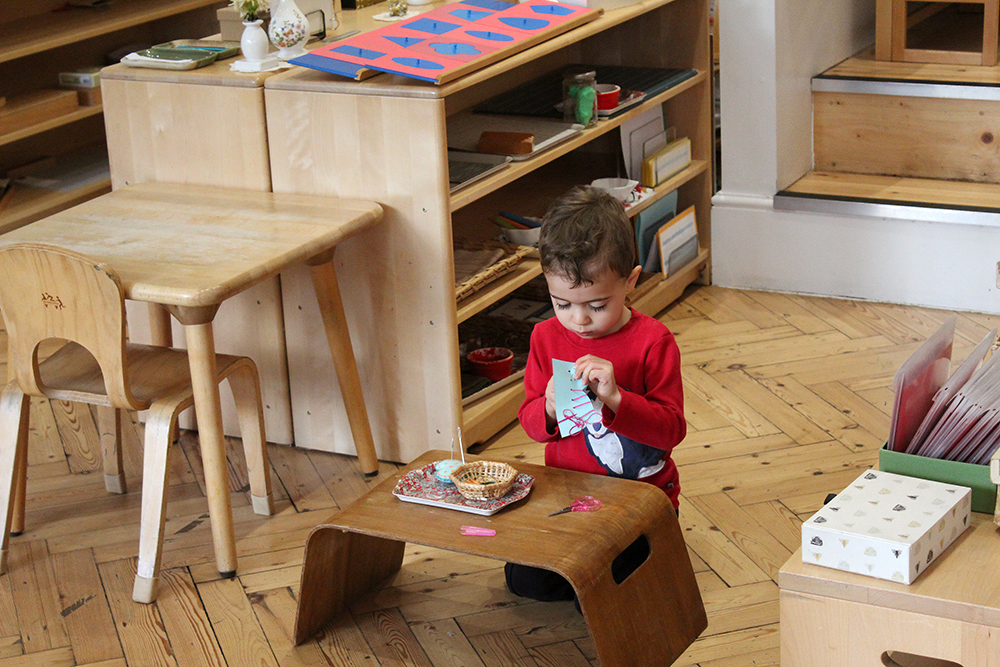

I sometimes say to Montessori teachers that if we are not observing, we do not really have a Montessori environment.
That may sound provocative. After all, the room may contain beautiful Montessori materials. The adult may know the presentations and follow the sequences carefully. The children may be free to choose work and move around the environment. But without observation, there is a danger that we deliver a Montessori curriculum in a fundamentally traditional way. Instead of following the child, we follow the album!
We decide what to present because it comes next in the sequence, because it appears age appropriate or because we think the child ought to learn it. The child may engage briefly and compliantly, but not with great interest or concentration. Before long, they are moving around the classroom looking for something else to do.
The adult’s response is to offer another presentation. And another.
The environment may look Montessori, but the direction is still coming primarily from the curriculum and the adult. The essential Montessori question has been lost: what is this particular child revealing to me about their needs and interests?
Observation is sometimes treated as something separate from teaching: an activity to undertake when the classroom is settled and the adult has a few spare minutes. Montessori saw it differently. Observation is the basis of our decisions about what, when and how to offer developmental activity to children. It allows us to notice what draws a child’s attention, what they repeat, what they avoid, what they almost achieve and where their effort is directed. It helps us recognise capacities that are emerging but not yet secure. It also reveals the conditions under which the child becomes deeply engaged.
This information changes our response. We may realise that the next presentation in the album is not the next presentation for this child. We may notice that an earlier activity contains precisely the challenge they are trying to master. We may see that the child’s apparent restlessness reflects a search for movement, order, language, social connection or a level of difficulty that the available work is not providing. In short, observation allows the environment to become responsive rather than merely well equipped.
When we respond to a child’s current interests and capacities, engagement changes. The child works with greater purpose, remains for longer and begins to repeat and persevere. This matters because attention is not simply desirable classroom behaviour. Attention is fundamental to learning and development. The child must attend to information in order to explore it, act upon it, receive feedback and gradually refine and consolidate knowledge and understanding. Without attention, experience passes without being deeply encoded and organised. Learning remains fragmentary and superficial.
Montessori recognised that concentrated activity has consequences extending far beyond the particular task. Through meaningful engagement, children begin to organise their movements, attention and actions. They develop persistence, independence and increasing capacity for self-regulation.
We cannot produce this concentration by repeatedly trying to capture the child’s attention. We create the conditions in which attention becomes possible by observing what has meaning for the child.
Teachers often tell me that they understand the importance of observation but cannot find time to do it. The environment is busy. Children need presentations, help, redirection and support. There is always another immediate demand. But this can become a self-perpetuating cycle. When we don’t observe, we are less able to recognise children’s present interests and developmental needs. We offer work that may be correct in the abstract but poorly matched to the child at that moment. The children engage only briefly, move on quickly and require further adult involvement. The adult becomes increasingly occupied with presenting, redirecting and attempting to generate engagement. As the children become less settled, the adult has even less time to observe.
The problem cannot be solved simply by working faster or giving more presentations. We have to interrupt the cycle that has developed. Even short, disciplined periods of observation can begin to change what we notice and therefore what we offer. As our responses become better matched to children’s interests, they are more likely to find purposeful activity. Greater engagement creates more space for observation, which improves the adult’s response further.
Observation does not take time away from Montessori practice. It makes more responsive Montessori practice possible.
“When we don’t observe, we are less able to recognise children’s present interests and developmental needs. We offer work that may be correct in the abstract but poorly matched to the child at that moment.”Louise Livingston, Head of Training
Montessori Diploma courses rightly require substantial periods of observation. These experiences introduce students to the discipline of watching carefully, recording objectively and resisting premature interpretation. They provide the foundation but this is only the start of what should be a life-long essential and developing practice for any Montessori teacher.
Observation is not a competence we acquire once and then simply possess. It develops through practice, reflection and repeated confrontation with the limits of our own perception.
As students, we observe while we are still learning Montessori theory, developmental principles, materials and presentations. Once we begin working, our position changes. We carry responsibility for a whole community. We make decisions throughout the day. We become familiar with individual children and may begin to predict what they will do before we have really looked.
Experience can help us see more, but it can also make our assumptions harder to detect.
We may write that a child was distracted, unmotivated, not ready or seeking attention without noticing that these are interpretations rather than observations. We may accumulate pages of notes without learning how to identify a pattern. We may record what children do but not use the information to examine the environment or our own practice.
A post-diploma course is therefore not about repeating the observation hours completed during training. It is an opportunity to revisit observation as an experienced practitioner, bringing real children, real questions and the complexity of daily classroom life.
A dedicated Observation course can help practitioners move from occasional looking towards systematic professional enquiry.
It can strengthen our ability to:
There is also great value in analysing observations with other Montessori practitioners. Another person may notice an assumption in our account, offer a different interpretation or ask the question that changes what we look for next.
The MMI Post Diploma Observation Course is designed for Montessori 3–6 Diploma holders working in Children’s House environments. Participants collect data through observation in their own classrooms and are supported to analyse it in depth. The course includes self-preparation, observation of the environment, systematic techniques, useful record keeping, work curves, attention and the process of following the child. Optional case studies provide an opportunity to apply the complete cycle of observation, interpretation, planning, response and further observation.
Montessori education cannot be reduced to knowing the materials or delivering the presentations accurately. These things matter enormously, but they become Montessori practice only when they are placed at the service of the child revealed through observation.
The album gives us a map of human development and the possibilities contained within the materials. It cannot tell us exactly where the child standing before us is today.
For that, we have to look. We have to notice what captures attention, what invites repetition, where effort becomes purposeful and when concentration begins to emerge. We then use our knowledge to respond to what we have seen.
That is how we stop merely delivering a Montessori curriculum and begin following the child.